
How to Plan a Successful Large Slab Pour Without Buying More Equipment
Here’s a look at planning and executing large concrete slab pours and why the right power screed solution matters for contractors managing tight tolerances, long runs, and elevation changes. This post is written for concrete project managers who need consistent flatness and levelness while keeping crews efficient and projects on schedule.
At Myles Construction, we specialize in power screed rentals for flat and sloped slab applications across commercial and industrial job sites. Our team supports contractors with reliable equipment, delivery logistics, and a trained power screed operator with every rental.
Let’s dig into how power screed rentals support production efficiency, and why renting specialized equipment like this makes more sense than buying.
Big Pours Bring Big Pressure
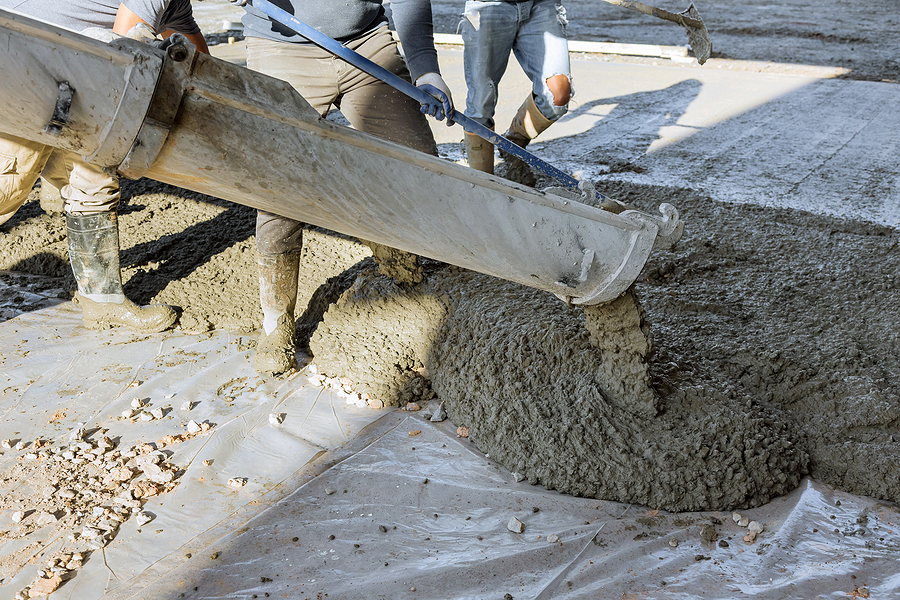
Large slab pours are a different animal from small pads or simple floors. You are often dealing with wide-open areas that demand consistent elevation across hundreds or thousands of square feet. Slopes, pitch requirements, and transitions add complexity. Reinforcement layouts can limit where equipment and crews can move.
Hand screeding in these conditions can turn into a grind. It takes more people, more time, and more coordination. Fatigue sets in, which increases the risk of low spots, waves, and uneven finishes. Even a skilled crew can struggle to maintain consistency across a large footprint when relying on manual screeding methods.
Buying specialized equipment may sound like the answer at first. Ownership brings its own set of challenges. Purchase price is only the beginning. Storage, transport, maintenance, and repairs all add up. If the equipment sits unused between projects, it ties up capital without delivering value.
If your goal is to complete demanding pours with speed, accuracy, and control, it’s time to rethink how you approach your next large slab job.
Mistakes Cost More Than Time
Without the right plan and tools, large pours can stretch crews thin. Overtime becomes the norm instead of the exception. Extra labor gets pulled in just to keep the pour moving. Communication breaks down as everyone races against the clock.
Quality also takes a hit. Flatness and levelness requirements on commercial and industrial floors are not suggestions. Miss those numbers, and you are looking at rework that eats into profit and schedules. Grinding, patching, or full tear-outs can derail other trades waiting for your pour to finish. Call backs due to rework can strain client confidence in a field that relies heavily on word of mouth marketing.
Equipment ownership can quietly add pressure, too. Machines always seem to break down at the worst times. Repairs delay pours. Depreciation continues whether the equipment is running or parked. Downtime becomes another variable you must manage on an already complex job.
Manual screeding can make you feel like you’re choosing between speed and precision. You either slow the pour to protect quality or push hard and hope the finish holds up. Neither option feels good when margins are tight and expectations are high.
Plan Smarter from the Start
Successful large slab pours start with a clear assessment of the site and the scope. You look at square footage, slab thickness, slopes, and elevation changes. You factor in reinforcement, in-slab features, and access points. This upfront work sets the tone for everything that follows.
Instead of defaulting to ownership, many contractors now turn to laser screed rental as a practical solution. Renting gives you access to high-performance equipment only when you need it. There is no long-term commitment and no maintenance burden after the pour.
With laser screed rental through Myles Construction Services, planning becomes more predictable. Equipment delivery is coordinated around your pour schedule. The machine arrives ready to work, and you can also rely on an experienced technician to operate it. That allows your crew to focus on placing, edging, and finishing instead of wrestling with screed rails and manual adjustments.
Here is how this approach supports a smoother pour from start to finish:
- Reduced labor demand during screeding
- Faster placement across large areas
- Improved consistency in flatness and levelness
- Better control over slopes and transitions
- No long-term ownership or maintenance costs
Power screed rental can give you the flexibility you need and the accuracy your clients count on.
Confidence Without Ownership
Planning a successful large slab pour does not require you to own every tool on the market. It requires smart decisions that balance performance, cost, and flexibility. Laser screed rental gives you access to advanced technology without locking your business into long-term expenses.
Myles Construction Services supports contractors and project managers who want results without unnecessary overhead. With laser screed rental, you can take on complex, large pours with confidence.
You protect your crew from burnout. You protect your schedule from delays. And you protect your bottom line by avoiding equipment that only pays off on paper.
Get the Slab Right the First Time
Accurately pouring a large slab demands planning, precision, and the right tools. Renting a Somero S-940 power laser screed from Myles Construction allows you to meet strict tolerances and reduce labor costs without buying more equipment and training your team.
This screed has a laser-guided system that automatically adjusts to elevation changes, slopes, and pitch. Every rental includes an experienced operator. This takes the pressure off your crew and reduces the chance of human error. If you are preparing for a commercial or industrial slab and want a smarter approach, contact us today to reserve your rental.