
Is a Laser Screed Rental Worth It for Your Project?
This article is written for commercial and industrial concrete contractors evaluating whether a laser screed rental is the right fit for large slab projects. It looks at how laser screed equipment impacts production speed, labor needs, and floor flatness results on demanding pours. It also explains when renting makes more sense than manual finishing or equipment ownership, especially on projects with strict specifications, tight schedules, and limited crew availability.
When a concrete pour goes wrong, it rarely announces itself during the work. The slab goes down, the crew wraps up, and the schedule moves forward. Everything looks fine until the floor flatness results come back.
Suddenly, what felt like a successful pour becomes a costly problem. High spots, low spots, or failed FF/FL tests trigger grinding, remediation work, schedule delays, and strained relationships with the general contractor. On large commercial and industrial projects, those outcomes can derail entire phases of construction.
That’s why more contractors are evaluating whether a laser screed rental is worth it for their projects. Not just as a piece of equipment, but as a production strategy.
What a Laser Screed Actually Changes on a Jobsite
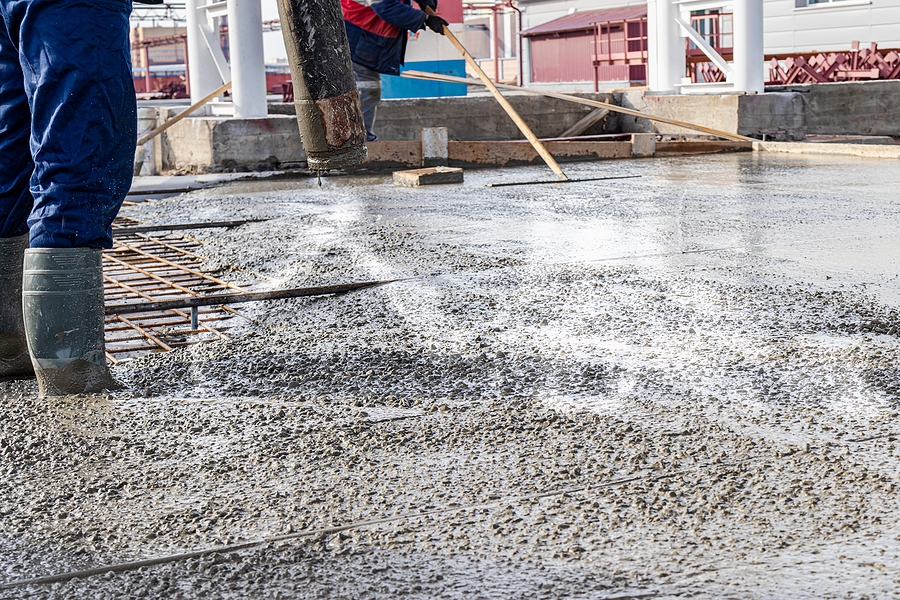
A laser screed fundamentally changes how large concrete slabs are placed and finished. Instead of relying on manual screeding and constant rework to achieve levelness, the machine automates the process of striking off and leveling concrete with laser-guided precision. For commercial and industrial contractors working on warehouses, distribution centers, manufacturing plants, parking decks, or data centers, that precision matters.
These projects often come with strict flatness and levelness requirements, along with complex slab designs that include slopes, elevation changes, or embedded systems like rebar or radiant heat tubing. At that scale, small inconsistencies do not stay small. They compound across thousands of square feet.
The Real Question: Is It Worth It or Just Expensive Equipment?
On paper, renting a laser screed may look like an added cost. But that framing misses the bigger picture. The real question is not what the rental costs, but what it prevents and what it replaces.
Traditional manual methods often require larger crews, more labor, and more time on the slab. Even with experienced finishers, achieving consistent FF/FL compliance across large pours can require significant rework or correction. A power laser screed rental from Myles Construction shifts that equation. It reduces reliance on manual leveling, improves placement consistency, and speeds up production in a way that directly impacts labor hours and schedule compression.
When evaluating whether it is worth it, contractors are really weighing three things:
- The cost of labor required for traditional screeding versus a screed rental complete with an experienced operator.
- The risk of failing flatness or levelness specifications on large slabs.
- The value of completing pours faster and moving other trades onto the site sooner.
In most large-scale commercial scenarios, those three factors outweigh the rental cost on their own.
Where the Value Shows Up Most Clearly
The value of a laser screed rental is not theoretical. It shows up in measurable jobsite outcomes, especially when conditions are less than ideal.
Labor availability is one of the biggest drivers. Many contractors are dealing with tighter crews, rising wages, and difficulty finding skilled finishers. A laser screed reduces the number of workers needed to achieve consistent results, helping you stay productive even when staffing is limited.
Schedule pressure is another major factor. On industrial projects, delays often cascade. A slab that takes longer than planned does not just impact finishing. It pushes back framing, racking installation, equipment placement, and inspections.
Precision requirements are also becoming more demanding. Modern industrial floors often require tighter tolerances than in the past, especially in facilities where automation, robotics, or high-density storage systems will be used.
Finally, there is the issue of equipment ownership. A laser screed is a significant capital investment. For many contractors, owning one does not make sense if they only need it intermittently. Maintenance, storage, transportation, and operator training all add ongoing costs and complexity.
What You Actually Get With a Rental
A key part of the value proposition is not just the machine itself, but how it is deployed.
With a professional rental setup, the laser screed is delivered to the jobsite ready to perform, and it comes with a skilled, trained operator. This is not a drop-off equipment rental where the burden shifts entirely to the contractor. The operator is part of the system, ensuring the machine is used correctly and efficiently for the specific slab conditions on site.
That distinction matters. Proper laser screed operation is not just about running equipment, but about managing concrete behavior, timing placement, coordinating with finishers, and adjusting to real-time site conditions. Having an experienced operator helps reduce risk and improve consistency from the first pass to the final finish.
When a Laser Screed Rental Makes the Most Sense
Not every project benefits equally from mechanized screeding. The value increases significantly based on project scale, complexity, and performance requirements.
A laser screed rental tends to make the most sense when:
- The slab area is large enough that manual screeding becomes a productivity bottleneck
- Floor flatness or levelness specifications are strict and heavily enforced
- The slab includes slopes, elevation changes, or embedded systems that complicate finishing
- The project schedule is compressed and delays carry high financial penalties
- Labor shortages make it difficult to staff large finishing crews consistently
In these scenarios, the power screed rental is not just helpful, it’s a way to stabilize production and reduce variability in outcomes.
The Bottom Line
A laser screed rental is not simply an equipment decision. It is a production strategy decision.
For commercial and industrial concrete contractors working under tight schedules, strict specifications, and ongoing labor constraints, the value often comes from what the machine eliminates: excess labor, inconsistent results, and time-consuming rework.
It also comes from what it enables: faster pours, more predictable outcomes, and the ability to keep downstream trades on schedule. When paired with a skilled operator, a laser screed rental becomes less about renting equipment and more about controlling risk on one of the most critical parts of a large construction project.
Is a Laser Screed Rental Worth It?
Whether a laser screed rental is worth it ultimately comes down to how much risk and inefficiency your project can afford. On large commercial and industrial slabs the value shows up quickly in reduced manpower, faster placement, and more consistent results across the entire pour. When the rental includes a skilled operator, it further reduces uncertainty and helps ensure the machine performs at its full capability in real-world conditions.
For contractors focused on hitting specifications the first time and keeping projects moving without costly delays or rework, a laser screed rental from Myles Construction is less of an expense and more of a strategic advantage on your next large project. Contact us to schedule your power laser screed rental today.