

Avoiding Bottlenecks During High-Volume Concrete Placement
Large commercial and industrial concrete pours can fall behind schedule when labor shortages, manual screeding, and equipment coordination create production bottlenecks. This is written for contractors managing high volume concrete placements who need to maintain a steady workflow without adding unnecessary labor or equipment costs. The perspective focuses on how laser screed rentals with skilled operators can help improve production consistency. It covers common causes of delays, equipment coordination, labor demands, and planning considerations for complex slabs.
Large commercial and industrial concrete pours create a different set of production challenges than smaller slabs. When hundreds or thousands of cubic yards of concrete need to be placed within a limited window, even a small slowdown can affect the entire operation.
A pump may be ready while the finishing crew is still working through the previous section. Concrete may arrive faster than the crew can strike it off. Or placement can slow because the available workers cannot keep up with the size of the pour. Once one part of the process falls behind, the effects can spread across the entire slab.
For contractors working on warehouses, manufacturing facilities, distribution centers, parking structures, data centers, and other large projects, avoiding these bottlenecks is critical to maintaining production and protecting the schedule.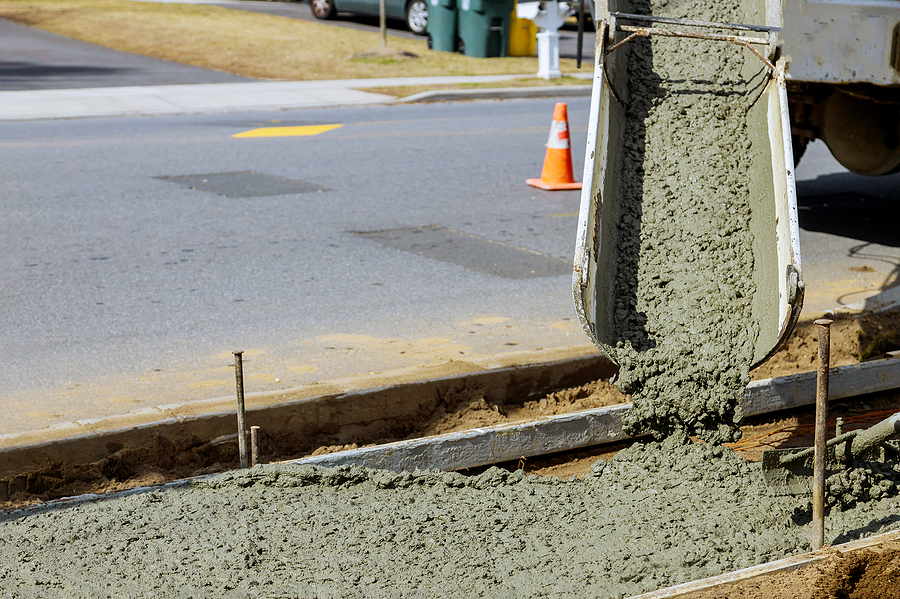
Where High-Volume Pours Commonly Slow Down
Concrete placement involves several activities happening at the same time. Material has to arrive consistently, crews need to place and consolidate it, and the slab has to be struck off and finished at the right pace.
The problem is that these activities do not always move at the same speed.
A large placement operation can become constrained by the most labor-intensive part of the process. If the placement crew is working faster than the finishing operation can handle, concrete may begin accumulating in areas that are not ready for the next step. If the finishing crew gets ahead, the pump or delivery schedule may become the limiting factor.
Manual screeding can become one of the biggest bottlenecks during a high-volume pour. Large areas require significant physical labor to move, strike off, and maintain at the required elevation. As the pour continues, fatigue can also affect production rates and consistency.
The result is not necessarily a dramatic stoppage. More often, production gradually slows, creating lost time that becomes difficult to recover.
Labor Can Become the Limiting Factor
Large pours require enough workers to keep material moving through each stage of placement. Adding more people is not always the best solution, particularly when experienced concrete labor is difficult to find.
Hand screeding requires multiple workers and becomes increasingly demanding as slab size increases. Workers have to maintain production while also controlling grade and surface consistency across large areas.
That creates a difficult balance. Reducing the crew too much can slow the pour, but adding labor increases project costs without necessarily solving the underlying production problem.
A laser screed rental can reduce the amount of manual labor required for strike-off while maintaining a consistent production pace. Instead of relying entirely on workers to manually move and strike off concrete across the slab, the equipment handles a significant portion of that work.
This can help the rest of the crew keep pace with placement and finishing rather than spending the entire pour trying to catch up.
Equipment Coordination Matters
High-volume placement depends on more than the screeding equipment itself. Pumps, ready-mix deliveries, placing crews, screeding equipment, finishing crews, and other trades or operations have to work within the same production sequence.
A bottleneck in one area can affect everything that follows.
For example, if the strike-off operation cannot keep up, the placement crew may need to slow down. That can disrupt concrete delivery timing and create additional pressure on the finishing operation later in the pour.
Planning the screeding operation around the expected placement rate helps contractors build a more predictable workflow. The goal is not simply to move concrete faster. It is to maintain a steady production rate that keeps each stage of the pour working together.
Consistency Helps Keep the Pour Moving
Speed matters during a large pour, but consistency matters just as much.
A crew that starts quickly but slows significantly as workers become fatigued may not complete the slab any faster than a crew maintaining a steady production rate throughout the placement.
Laser screeding can help reduce this variability by providing a more consistent method of striking off the slab. The equipment handles repetitive work that would otherwise require substantial manual effort, helping crews maintain production across large areas.
This is particularly valuable when a project involves tight floor tolerances or complex elevations. The objective is to keep material moving without sacrificing the level of control required for the finished slab.
Complex Slabs Require More Planning
Not every high-volume pour is a simple flat slab. Commercial and industrial projects may include slopes, elevation changes, embedded items, rebar, mesh, heat tubes, or other conditions that affect how concrete is placed and struck off.
These conditions can create additional opportunities for delays if the crew has to repeatedly stop, reposition equipment, or manually address areas that are difficult to reach.
Laser screeding does not eliminate those challenges, but the right equipment and an experienced operator can help contractors account for them as part of the placement process. Planning the equipment, access points, crew responsibilities, and expected production rate before the pour gives everyone a clearer understanding of how the slab will move from placement to finishing.
An Experienced Operator Can Reduce Production Problems
Equipment alone does not eliminate bottlenecks. The operator plays an important role in keeping the screeding operation aligned with the rest of the pour.
With a skilled, trained operator handling the laser screed, the concrete crew does not have to take on the additional responsibility of learning specialized equipment while trying to manage a high-volume placement. The operator can focus on the screeding process while the contractor’s crew concentrates on placement, finishing, and other responsibilities.
This is one of the advantages of an operator-included laser screed rental. Contractors get the equipment and the experience needed to use it without taking on the cost and responsibility of owning, maintaining, and training for specialty equipment.
Keep High-Volume Pours Moving
Bottlenecks during large concrete placements rarely come from one major failure. They often develop from small production constraints that compound as the pour continues.
Reducing manual screeding demands, coordinating equipment with the placement schedule, and maintaining a consistent production rate can help contractors keep large slabs moving from placement through finishing. For complex commercial and industrial projects, those improvements can make a meaningful difference in labor demands, schedule control, and overall production.
A laser screed rental with a skilled, trained operator gives contractors a practical way to increase screeding capacity without adding a large number of workers or taking on the burden of specialty equipment ownership.
Planning a high-volume concrete pour? Contact us to discuss your project and learn how an operator-included laser screed rental can help keep your job moving.