

Stay on Schedule With Back-to-Back Concrete Pours
Large commercial concrete pours often run on tight schedules where delays in one slab can affect the entire project timeline. This is written for contractors and project teams managing back to back concrete pours on industrial and commercial sites. The perspective reflects Myles Construction’s experience supporting large scale slab work with laser screed rentals. It covers how small inefficiencies during placement can lead to schedule disruptions, why consistent production rates matter, and how equipment like laser screeds can help improve speed, accuracy, and coordination between consecutive pours.
A large warehouse slab is scheduled for a Monday morning pour. The crew is mobilized, the pump is staged, and finishing teams are already lined up for a second pour later in the week. Everything is sequenced tightly because there’s no room for downtime between slabs.
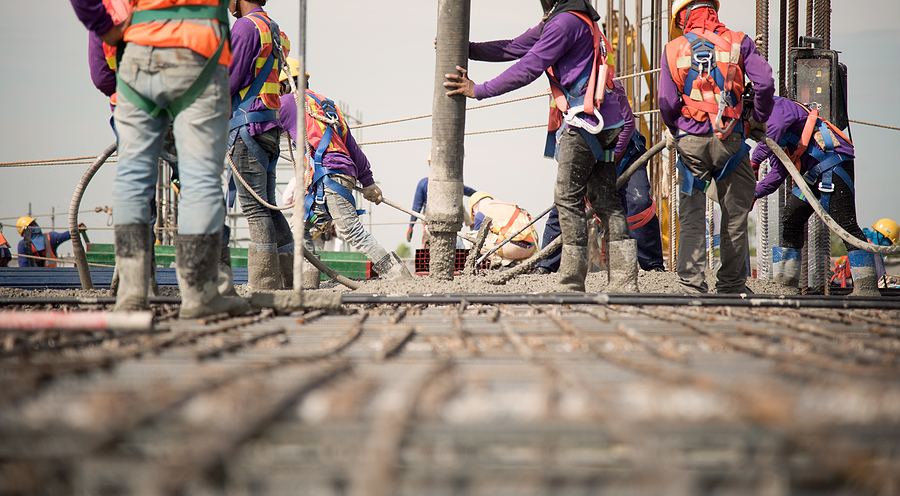
At first, things look fine. The pour starts on time and material delivery is steady. But as placement continues, the pace begins to slow. Hand screeding across thousands of square feet starts to fall behind the pump rate. Elevation transitions take longer to dial in. Finishing crews are waiting on sections to be brought to grade before they can move forward.
By the time the slab is halfway complete, the schedule is no longer predictable.
What should have been a controlled, efficient placement turns into a race to finish before daylight runs out. And the impact doesn’t stop at that slab. The second pour, already scheduled and coordinated, is now at risk of being delayed before it even starts.
Why Back-to-Back Pours Can Fall Behind on Large Slabs
On large commercial and industrial slabs, delays rarely come from one major mistake. They more often come from small inefficiencies that build up across a large surface area and compound under time pressure.
Contractors working on warehouses, distribution centers, manufacturing facilities, parking structures, and data centers are often dealing with complex conditions including long uninterrupted slab runs, strict FF/FL requirements, embedded systems like radiant heat tubing, and variable slab elevations. All of this makes consistent placement more difficult to maintain manually.
Even experienced crews are affected by fatigue and changing site conditions over the course of a large pour. What starts as a steady production rate can gradually become uneven as the slab progresses. That variability makes it harder to coordinate finishing work, inspections, and downstream scheduling.
When pours are scheduled back-to-back, there is no buffer to absorb those inefficiencies. A slowdown on one slab immediately compresses the timeline for the next.
The Cost of Losing Control of Slab Production Rates
When slab production slows or becomes inconsistent, the impact extends well beyond the pour itself. On commercial and industrial projects, a delayed slab can create a ripple effect across multiple phases of construction.
Other scheduled pours may need to be pushed, which disrupts carefully planned sequencing. Labor that was allocated to follow-up work may sit idle or need to be reassigned at a higher cost. Concrete deliveries that were timed precisely for the schedule may need to be adjusted or rescheduled, sometimes at a premium.
There is also the issue of rework. When floor specifications are not met on the first pass, corrective grinding or patching can add unplanned time to the schedule. That time is often taken directly from the next phase of work, tightening an already compressed schedule even further.
On projects where turnover dates are tied to tenant occupancy or operational readiness, even a small delay in slab completion can create significant pressure on your crew.
How Laser Screed Rentals Stabilize Production on Large Pours
Laser screed rentals can help contractors regain control over one of the most variable parts of concrete placement: the production rate.
Instead of relying on manual screeding across large areas, laser screed systems use automated grade control to maintain consistent elevation while allowing crews to move at a faster and more predictable pace. This consistency is especially important on large slabs where minor variations in speed or accuracy can quickly turn into delays.
With more consistent placement, finishing crews are no longer forced to wait on corrections or rework before moving forward. The slab progresses in a smoother, more continuous flow from placement to finishing to inspection.
That predictability is what matters most when multiple pours are scheduled close together. When production rates are stable, scheduling becomes far easier to manage across the entire project sequence.
Faster Placement Without Sacrificing Precision
Speed alone is not the goal of industrial slab work. The real requirement is maintaining both speed and precision at scale. On slabs with strict FF/FL specifications, inconsistency can lead to expensive corrective work that ultimately slows the project down more than it accelerates it.
Laser screed rental allows contractors to increase placement speed while maintaining tight control over flatness and elevation. Instead of slowing down to ensure accuracy, the system maintains accuracy as production speed increases.
This is especially valuable on large open slabs where thousands of square feet need to be placed within a limited window. The ability to move faster without introducing additional variability helps crews maintain momentum throughout the pour, rather than losing time to corrections or adjustments mid-process.
Reduced Rework Means Fewer Disruptions Between Pours
Rework is one of the most common reasons slab schedules slip, especially on high-tolerance commercial floors. Even small inconsistencies in grade or finish can require additional grinding, patching, or re-leveling before the slab is approved.
Laser screed rentals reduce that risk by improving initial placement accuracy. Because elevation is controlled during the strike-off process, fewer areas require correction after the fact. That leads to a cleaner handoff between placement and finishing, with fewer interruptions for rework.
On back-to-back pours, this matters even more. When the first slab finishes cleanly and stays close to spec, it protects the timeline for every subsequent pour that follows. Less rework means less schedule compression and fewer project disruptions.
Keeping Complex Pours on Schedule With Less Risk
Back-to-back concrete pours leave very little margin for error. When production slows or becomes inconsistent, the impact is immediate and extends across multiple phases of the project.
Laser screed rentals help reduce that risk by improving placement speed, increasing accuracy, and delivering predictable production rates across large slabs. At Myles Construction, our power laser screed rentals include an experienced operator for a more stable and controlled way to manage demanding pour schedules. Contact us to schedule your next rental.