

When Your Crew Is Stretched Thin, What’s the Smartest Part of the Pour to Outsource?
You have the trucks lined up, the inspection window locked in, and a slab that has to meet tight FF/FL numbers before the next trade mobilizes. On paper, everything works. Out on the deck, you are short on finishers, the schedule did not move, and the placement rate will not slow down to match your manpower. The pressure is not just about getting concrete on the ground. It is about placing it at production speed, holding elevation across transitions, and walking away with a floor that passes without callbacks.
For commercial and industrial concrete contractors working in warehouses, manufacturing plants, and data centers, this scenario is no longer rare. Labor shortages with aggressive timelines always land on the same day.
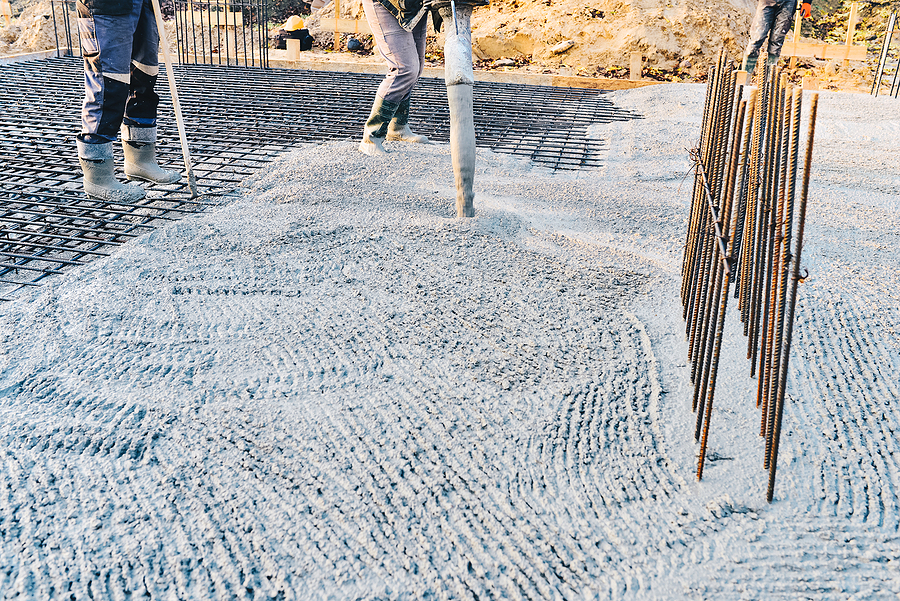
The Timeline Looks Manageable Until Placement Begins
The early stages of a large slab follow a rhythm your team understands. Subgrade prep, layout, reinforcement, vapor barrier, and embeds can be sequenced and adjusted if something falls behind. If you lose time here, you can often recover by shifting labor, extending hours, or resequencing tasks.
Once the concrete starts flowing, flexibility disappears.
Now the clock is tied to mix design, delivery intervals, and set time. You are watching how quickly the material builds across the deck and how much workable time remains. With a full crew, that pressure is manageable. A light crew changes the level of difficulty.
This is also when slab complexity shows up in real time. Long pulls, elevation changes, drainage pitch, and tight tolerances for equipment layouts demand accuracy from the first pass. There is no opportunity to come back later and reset the starting point.
Placement Speed and Crew Size
On large commercial concrete pours, the work keeps moving even if there aren’t enough workers. If the crew responsible for leveling the concrete can’t keep up, the concrete starts to pile up. As a result, the surface begins to firm up faster than expected, leaving less time for the finishing steps.
That compression creates a chain reaction. Bull floating starts later than it should. Edges begin to set before they are ready. Finishers are working harder to correct conditions that started upstream.
The Phase That Is Hardest to Fix Later
Every stage in the pour matters, but not every stage carries the same long term impact. You can bring in additional help for cleanup, adjust curing methods, and spend more time on detailing.
Once a slab has been leveled incorrectly, it’s very difficult to fix later.
The screeding phase establishes elevation, flatness, and levelness for the entire placement. If that pass falls behind or loses accuracy, every step that follows is working from a compromised starting point. Grinding, patching, or extended finishing time adds cost and still may not deliver the tolerances required for the job.
For projects with strict FF/FL specifications, this is the moment that determines whether or not the floor will perform as expected.
Where Bottlenecks Typically Appear
When crews are stretched thin, the same challenges show up again and again:
- Keeping up with high volume placement rates.
- Holding grade across long distances and elevation transitions.
- Maintaining floor tolerances with fewer experienced finishers.
- Working efficiently over reinforcement, mesh, or embedded systems.
- Recovering areas that begin to set too quickly.
These are not minor slowdowns. They affect production speed, floor quality, and the ability to stay on schedule with all the other trades on the job.
Reassigning the Most Demanding Task
The screeding pass of any concrete pour is the most production sensitive and the least forgiving. It has to happen at the pace of placement, and it sets the baseline for everything that follows. By renting a laser screed with a skilled, trained operator, you shift that responsibility to equipment designed to maintain elevation continuously and at a much faster rate.
That single decision can change how the rest of your day unfolds.
Placement can move at a consistent rate because you are not waiting for a hand crew to catch up. Your finishing team starts from a surface that is already on grade. Labor is no longer concentrated in the most physically demanding position on the deck, which allows your experienced people to stay focused on finishing and detailing.
Production Gains Without the Equipment Burden
Large commercial contractors understand the appeal of owning specialty equipment. They also understand the cost of maintaining it, transporting it, storing it, and keeping trained operators available.
For many, the need for a laser screed is tied to specific projects rather than every concrete pour. Outsourcing that portion of the job provides access to high production performance without adding another piece of equipment to manage.
It also brings consistency to projects that involve slab on deck placements, dense reinforcement, or embedded systems. These conditions slow hand crews and increase the difficulty of holding grade. A laser screed operates over these obstacles easily while maintaining the elevation the floor requires.
A More Predictable Finish
When the most demanding phase of the placement is handled by high production equipment and an experienced operator, the rest of the timeline stabilizes. Finishing becomes more predictable. Floor testing becomes less stressful. Other trades mobilize onto a slab that meets the tolerances they were expecting.
For contractors who are responsible for delivering large commercial floors with limited manpower and tight schedules, the smartest portion of the pour to outsource is the one that determines whether the entire placement succeeds. Partnering with Myles Construction Services for laser screed rental allows your crew to stay focused, your schedule to stay intact, and your floor to meet specification without adding more strain to an already stretched team.For upcoming pours where manpower, schedule, and floor tolerances all have to line up, contact us to coordinate a laser screed rental that keeps your placement moving and your slab on spec.