

Where to Reduce Crew Demands Without Sacrificing Quality
Labor shortages and rising project demands are pushing concrete contractors to find better ways to complete large pours with fewer crew challenges. This is written for commercial and industrial contractors looking for ways to improve productivity without sacrificing slab quality. The article explains where labor can be reduced, how laser screed technology improves efficiency, and why smarter resource planning can help crews deliver consistent results.
Finding qualified construction workers has become one of the biggest challenges facing commercial and industrial concrete contractors. Experienced finishers are in high demand, labor costs continue to rise, and project schedules leave little room for delays. At the same time, clients still need floors that meet strict flatness and levelness specifications, regardless of how difficult it may be to staff a job.
For many contractors, the solution is not simply hiring more people. It is finding smarter ways to use the crews they already have. The challenge is knowing where labor can be reduced without increasing the risk of costly mistakes, slower production, or failed inspections.
Not every task on a large concrete pour requires the same level of manpower. Some activities depend on skilled workers whose experience directly impacts the finished slab, while others can be completed more efficiently through the right equipment and planning. Understanding that difference can help contractors improve productivity while maintaining the high-quality results their customers expect.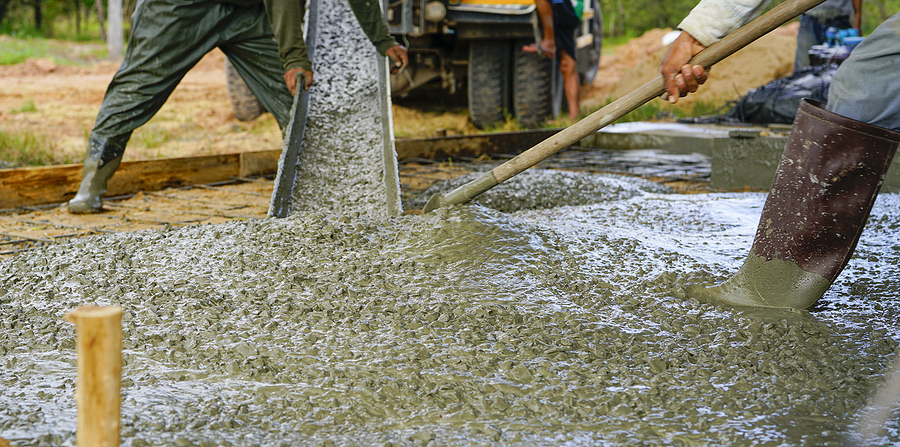
Where Efficiency Creates Better Results
Instead of reducing labor in quality-sensitive areas, contractors often benefit more by improving the efficiency of repetitive production tasks. Strike-off operations are one example.
Traditional hand screeding requires multiple crew members to manually level fresh concrete over large areas. The work is physically demanding and becomes increasingly difficult as slab size increases. Maintaining consistent production throughout a long pour requires significant effort, especially as crews become fatigued.
Grade control is another opportunity for improved efficiency. Manual methods rely heavily on worker experience and continuous adjustments to maintain slab elevation. As project complexity increases, achieving consistent results becomes more challenging.
Placement consistency also plays a major role in overall productivity. When concrete can be placed and leveled more consistently, finishing crews spend less time correcting imperfections and more time maintaining steady progress across the project.
Improving efficiency in these production tasks allows contractors to reduce crew demands without compromising the quality of the finished floor.
Why Hand Screeding Demands So Much Labor
Hand screeding has been a reliable method for many years, but it also requires considerable manpower. Large industrial slabs demand continuous movement across thousands of square feet while maintaining precise elevations. Multiple workers are needed to strike off the concrete, check grades, and keep production moving as ready-mix trucks continue arriving.
The physical demands of this work create another challenge. As the day progresses, fatigue naturally affects productivity. Even experienced crews can slow down during large pours, increasing the likelihood of inconsistencies that require additional finishing or correction later.
Fatigue can also make it more difficult to maintain the production pace needed to keep concrete placement synchronized with deliveries and finishing operations. While skilled crews remain essential, relying entirely on manual screeding places a significant burden on available labor resources.
Reducing Manpower Without Lowering Quality
One of the most effective ways to improve labor efficiency is by reducing the amount of manual screeding required during placement. Laser screeds automate the strike-off process using laser-guided technology to achieve consistent slab elevations while maintaining the production speed needed for large commercial and industrial projects.
In lieu of assigning multiple workers to labor-intensive screeding tasks, contractors can redirect those employees toward finishing, quality control, logistics, or other activities that benefit from skilled oversight. This approach does not replace experienced workers. Instead, it allows those workers to focus on the tasks where their expertise has the greatest impact on the finished product. The result is a more balanced operation that supports both productivity and quality.
Consistency Helps Crews Stay Productive
One of the hidden costs of labor-intensive placement methods is production variability.
When physical fatigue begins affecting crew performance, production often becomes less predictable. Small inconsistencies during placement can create larger problems later in the finishing process, increasing labor demands instead of reducing them.
Laser screeds help create a more consistent workflow throughout the entire pour. Because the strike-off process remains steady, finishing crews can work more efficiently without constantly adjusting for variations in slab elevation.
This consistency helps reduce bottlenecks while allowing production to continue at a more predictable pace from the beginning of the pour until the final section is completed.
Over the course of large projects involving multiple pours, those improvements can significantly reduce schedule pressure and improve overall productivity.
Why Operator Included Rentals Make Resource Planning Easier
Improving efficiency is not just about equipment. It is also about reducing the burden placed on existing personnel.
A laser screed rental that includes a skilled, trained operator eliminates the need to assign internal employees to learn specialized equipment or temporarily shift them away from other responsibilities.
Instead of investing time in training or worrying about equipment operation, contractors receive an experienced operator who is prepared to work alongside the placement crew from the start of the project. The equipment arrives ready for work, reducing coordination challenges and allowing project managers to focus on keeping the overall job on schedule.
Smarter Resource Allocation Leads to Better Projects
Today’s labor challenges are forcing contractors to rethink how they use their crews. The answer is rarely to reduce workers in areas that directly influence quality. Instead, the greatest opportunities come from improving the efficiency of labor-intensive production tasks while allowing experienced personnel to focus on finishing, quality control, and project coordination.
By incorporating a laser screed rental with a skilled, trained operator into the production plan, contractors can reduce the manpower required for strike-off operations, maintain consistent slab quality, and ease the physical demands placed on their crews. Smarter resource allocation is not about cutting labor. It is about using every member of the team where they can deliver the greatest value while keeping projects on schedule and meeting demanding performance standards. To schedule your laser screed rental with Myles Construction Services, contact us today.