
Laser Screeding for Slab-on-Deck Projects What Contractors Need to Know
Slab on deck projects require precise elevation control, efficient concrete placement, and careful coordination around reinforcement and structural conditions. This is written for concrete contractors looking for ways to improve productivity and consistency on elevated slab projects. The perspective reflects Myles Construction Services’ experience providing laser screed rentals with trained operators for commercial and industrial concrete work. It covers the challenges of slab on deck construction, how laser screeding can improve grade control and production, and why experienced equipment operators can make a difference on complex pours.
Slab-on-deck projects present unique challenges for concrete contractors. Unlike slab-on-grade construction, these elevated pours require careful coordination, precise elevation control, and an understanding of how the supporting deck behaves during concrete placement. Small mistakes can become major issues, especially on large floors with tight tolerance requirements.
As commercial construction continues to grow, warehouses, parking structures, office buildings, mixed-use developments, and manufacturing facilities are incorporating elevated concrete slabs. Contractors must complete these pours efficiently while meeting strict quality standards.
Traditional placement methods can make that difficult. Labor-intensive screeding, inconsistent grade control, and the physical demands of working over a structural deck increase the risk of delays and costly corrections. Understanding how laser screeding fits into slab-on-deck construction can help contractors improve productivity while maintaining precision.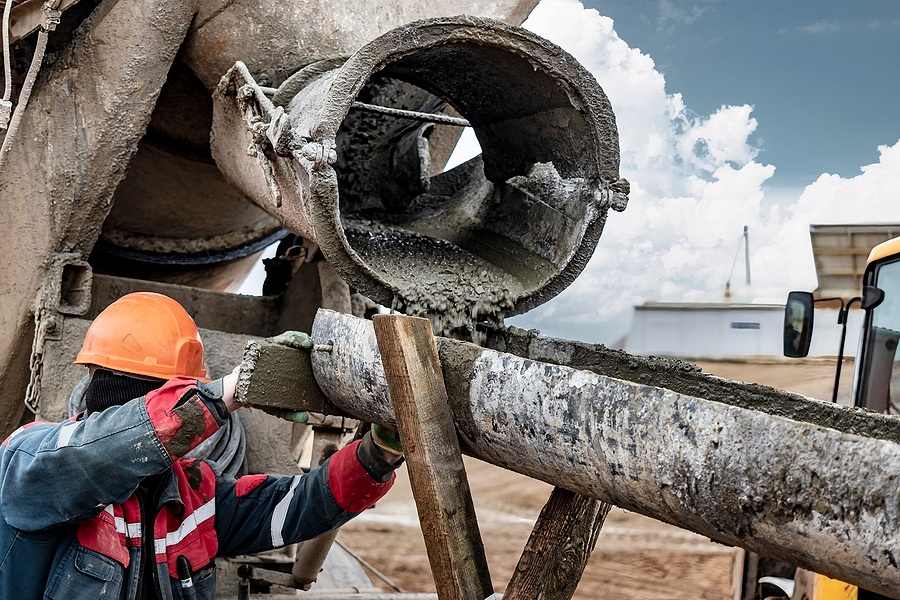
Slab-on-Deck Construction Is Different From Slab-on-Grade
At first glance, placing concrete on a structural deck may seem similar to placing concrete directly on grade. In reality, the conditions are different.
A slab-on-grade project benefits from a stable base. Slab-on-deck construction introduces additional variables. The supporting structure can respond differently as concrete is placed, reinforcing steel is often more congested, and maintaining consistent elevations across large areas becomes more challenging.
Contractors cannot simply rely on methods that work well on ground-supported slabs. Success depends on understanding elevated construction and adapting placement techniques accordingly.
Vibration Can Affect Both Production and Accuracy
As workers, equipment, and fresh concrete move across the deck, slight vibration and deflection are normal. These movements create additional considerations during concrete placement.
Maintaining consistent slab elevations becomes more difficult when the working surface responds to changing loads throughout the pour. Equipment selection, placement sequence, and production pace influence how efficiently crews can work while maintaining specified elevations.
Laser screeding helps create a more controlled placement process, but achieving the desired results requires operators who understand how elevated decks behave during construction.
Rebar Congestion Creates Additional Challenges
Many slab-on-deck projects involve dense reinforcement. Rebar, welded wire reinforcement, post-tension cables, embedded conduit, mechanical sleeves, and other structural components often occupy the same space where concrete placement must occur.
This congestion creates obstacles for crews and equipment. Traditional hand screeding becomes more difficult as workers navigate around reinforcement without disturbing its position. Physical limitations can slow production and make maintaining elevations more challenging.
Laser screeds designed for commercial applications can operate over reinforcing steel while maintaining production efficiency. Operators must also understand how to adapt placement techniques around congested reinforcement without compromising structural requirements.
Elevation Accuracy Matters More Than Ever
Large commercial projects continue to demand tighter floor tolerances.
Whether a building will house automated storage systems, manufacturing equipment, office space, or parking levels, accurate slab elevations contribute to the finished structure’s performance.
Minor inconsistencies during placement can become difficult and expensive to correct after concrete cures. Grinding, leveling, and other corrective measures increase labor costs and can delay follow-up trades.
Laser-guided technology helps contractors maintain grade control across large placement areas while reducing variability associated with manual screeding.
Manual Screeding Places More Demands on the Crew
Large slab-on-deck pours require significant coordination and physical effort.
Traditional hand screeding depends on multiple workers maintaining production while navigating reinforcement, adjusting for varying slab conditions, and working across elevated surfaces. As the day progresses, physical fatigue affects productivity.
Crews become slower, production rates fluctuate, and maintaining consistent elevations becomes increasingly difficult. These challenges become greater when labor shortages limit available manpower.
Rather than assigning additional workers to physically demanding strike-off operations, many contractors are looking for ways to improve efficiency without sacrificing floor quality.
Laser Screeding Improves Consistency Across the Entire Pour
Laser screeding automates one of the most labor-intensive aspects of concrete construction.
Laser-guided systems maintain consistent elevations across large placement areas while supporting faster production rates. For slab-on-deck projects, this helps crews maintain steady progress despite the challenges of elevated construction.
Finishing operations also benefit from a more uniform surface. When slab elevations remain consistent, finishers spend less time correcting variations and more time maintaining production flow. This reduces bottlenecks while helping projects stay on schedule.
The result is a more predictable production process from the first section of concrete to the last.
Experience Makes the Difference
While laser screed technology offers significant advantages, successful slab-on-deck placement still depends on experienced operators.
Every elevated project presents different conditions. Deck configuration, reinforcement density, structural design, concrete mix characteristics, and project sequencing all influence placement.
Experienced operators understand how these factors affect production. They know when adjustments are needed, how to maintain productivity without compromising quality, and how to work effectively around reinforcement and changing deck conditions.
Operator Included Rentals Simplify Complex Projects
Managing a large commercial concrete project requires coordinating multiple trades, equipment deliveries, inspections, and scheduling requirements. Adding responsibility for specialized laser screed operation can create unnecessary strain on internal resources.
A laser screed rental that includes a skilled, trained operator simplifies that process. Rather than assigning employees to learn unfamiliar equipment or pulling experienced personnel away from other responsibilities, contractors receive a turnkey solution ready for production.
The operator can adapt placement techniques to slab-on-deck conditions, allowing project managers to focus on the pour instead of equipment operation.
This approach reduces coordination challenges while increasing confidence that production goals and quality expectations will be met.
Build Better Elevated Slabs With the Right Approach
Slab-on-deck construction demands more than speed. It requires careful planning, precise elevation control, and the ability to adapt to conditions that differ from slab-on-grade work. Vibration, congested reinforcement, and strict tolerance requirements increase project complexity.
A laser screed rental with a skilled, trained operator provides contractors with an efficient way to improve production while maintaining the accuracy large commercial and industrial projects require. By combining advanced equipment with experienced operation, contractors can reduce labor demands, minimize risk, and deliver elevated concrete slabs that keep the project moving forward.
If you’re planning a slab-on-deck project and need a reliable way to improve placement efficiency without sacrificing quality, a laser screed rental can help. Contact Myles Construction Services to discuss your upcoming pour and learn how our operator-included rental can help your crew complete the job with greater efficiency and confidence.